


Overview

What is Pubky?
Section titled “What is Pubky?”Pubky is an open protocol for applications built around public-key identities and user-chosen hosting. A public key identifies the user; PKARR lets applications discover the user’s Homeserver.
The protocol provides identity, discovery, and storage. Applications decide how to use that storage and access it through the SDK. pubky.app is a social application built on it, with shared data models and an indexer for feeds and search.
Why Pubky exists
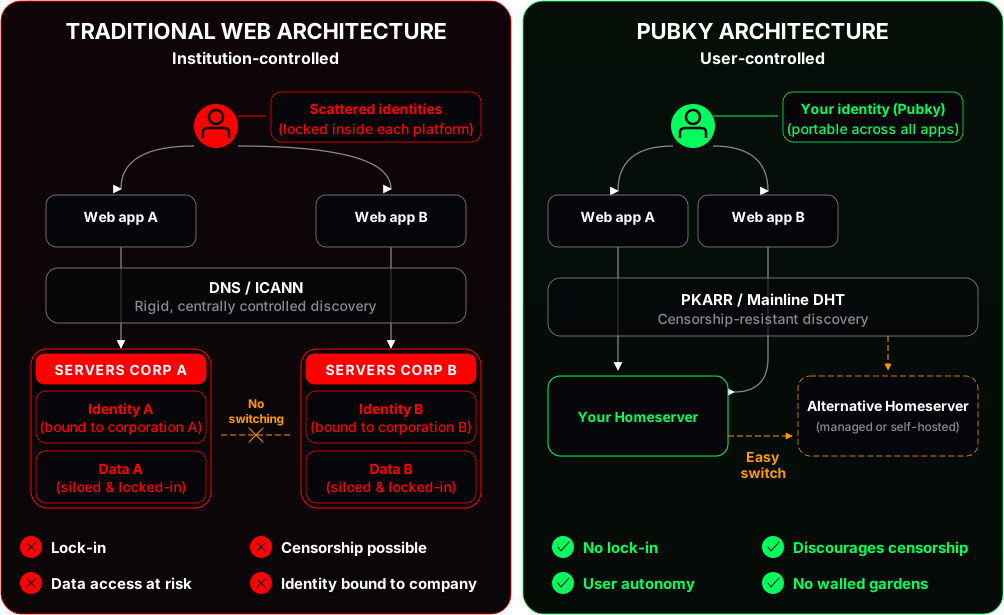
Section titled “Why Pubky exists”Pubky’s goal is a web where people control their identities, choose where their data lives, and decide how to discover and filter information.
On a service that owns both your account and its database, changing applications often means starting again. Pubky separates those responsibilities:
- Your identity can outlast a provider. Applications identify you by your public key, and discover where your data is hosted. Changing hosts does not require a new identifier. Making that move practical also requires your key, usable copies of your data, and migration tooling; see Credible Exit.
- Less dependence on a single service. User-chosen hosting and decentralized discovery support Censorship Resistance.
- Different apps can work with the same data. A post or profile can be read by another app that understands its format. The shared social specifications make this possible for pubky.app’s data, while other apps can define formats suited to their own purpose.
- The view of the data can change independently. Clients and indexers can offer different feeds, search results, or filters. Relationships and tags supply context for those views through the Semantic Social Graph.
For a developer, this means building on familiar web applications and HTTP storage while letting users choose their identity and hosting. An app can access a user’s files directly or use an indexer when it needs to search across many users. The architecture overview explains how those pieces fit together.
These choices do not eliminate trust in software or hosting providers. The Security Model explains key custody, public data, and what a Homeserver operator can do.
The broader vision
Section titled “The broader vision”The Atomic Economy extends these ideas into a broader vision of economic and social coordination. Start with The Atomic Economy: Reclaiming Society from the Inside Out, then explore the original essays and talks. These describe motivations and possibilities; Architecture explains the implemented components and their boundaries.
Quick Start
Section titled “Quick Start”- Try Pubky: First Steps introduces the user journey.
- Build an app: the Developer Guide walks through writing and reading your first Pubky data.
- Run a Homeserver: follow the Install Guide and Deployment Guide.
- Find a project or tool: use the Resources directory.